


236. 二叉树的最近公共祖先
核心逻辑
本解法采用 递归 的策略:
- 递归终止条件:
- 如果
root == null,说明走到底了还没找到 p 和 q ,返回null。 - 如果
root就是p或q其中一个,则直接返回root。
- 如果
- 递归搜索:
- 分别在
root的左子树 (left) 和右子树 (right) 中搜索p和q。
- 分别在
- 合并结果:
- 若
left不为空且right不为空,说明p和q分别位于root的两侧,因此root就是最近公共祖先,返回root。 - 若只有
left不为空,说明p和q都在左子树中,返回left。 - 若只有
right不为空,说明p和q都在右子树中,返回right。 - 若
left和right都为空,说明该子树不包含p或q,返回null。
- 若
🔥代码实现
/**
 * Definition for a binary tree node.
 * public class TreeNode {
 *     int val;
 *     TreeNode left;
 *     TreeNode right;
 *     TreeNode(int x) { val = x; }
 * }
 */
class Solution {
    public TreeNode lowestCommonAncestor(TreeNode root, TreeNode p, TreeNode q) {
        // 终止条件 1:遍历到空节点
        if (root == null) {
            return null;
        }
        // 终止条件 2:当前节点就是目标节点 p 或 q(直接比较引用)
        if (root == p || root == q) {
            return root;
        }

        // 递归搜索左右子树
        TreeNode left = lowestCommonAncestor(root.left, p, q);
        TreeNode right = lowestCommonAncestor(root.right, p, q);

        // 判断并返回结果
        if (left != null && right != null) {
            return root;
        } else if (left != null && right == null) {
            return left;
        } else if (right != null && left == null) {
            return right;
        } else {
            return null;
        }
    }
}
📚遇到的问题:
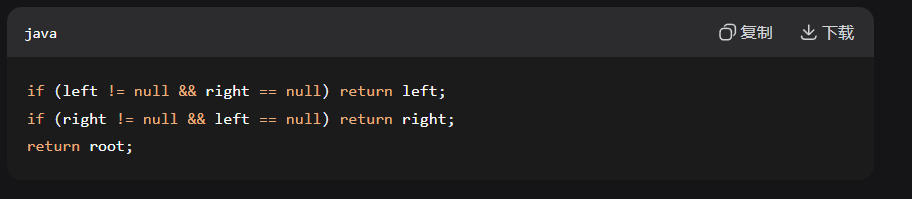
这是最初思路。首先,原思路认为
left和right在子树中绝对存在,递归时一定能找到,这一点没毛病。但随后产生了一个错误想法:认为
left和right不会为null。由于叶子节点本身没有左右子节点,所以以叶子节点为基准时,
left和right就是真实的null。而原代码在逻辑处理上直接return root,没有返回null。这样一来,由底向上返回时,各个节点都会返回root,最终直接返回了根节点,导致错误。